NEW YORK, NY — On August 15, EXHALE NYC returns with its signature blend of cannabis culture, wellness, and education.
Step into a lush garden oasis and experience a different way to EXHALE. EXHALE NYC brings together the calming ritual of cannabis with intentional wellness practices, creating a refreshing, community-centered space to slow down, connect, and simply be.
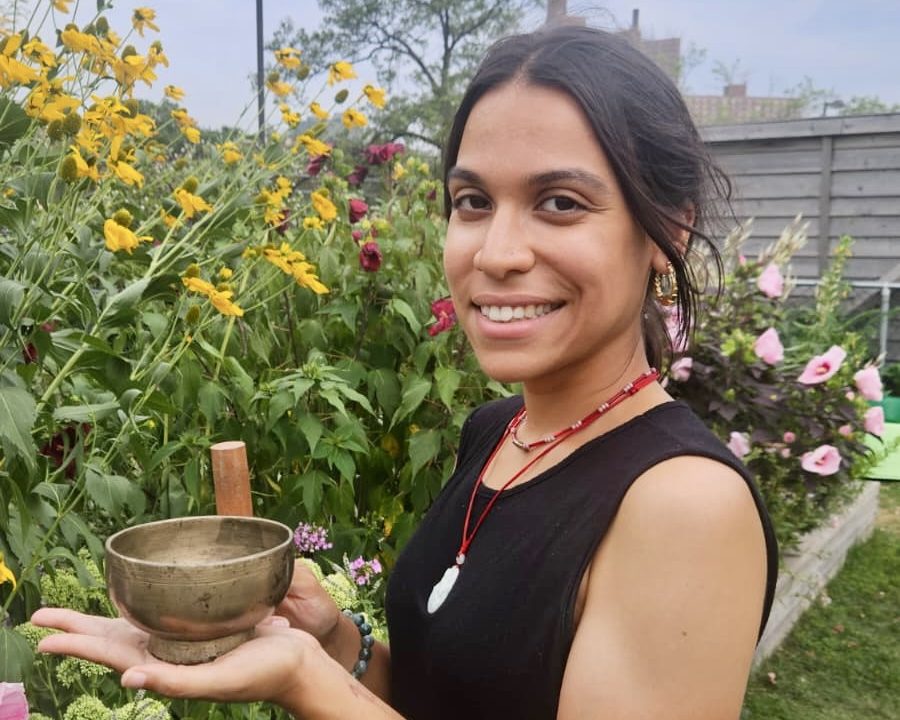
The Garden Soundbath activation features a Sound Bowl Meditation and guided Mindfulness session led by Mattia “Tia” Colon, a Master Level Social Worker, meditation facilitator, and community gardener. Inspired by her connection to a Vietnamese Buddhist temple in the Bronx, Tia uses crystal and metal singing bowls to create soothing sound frequencies that encourage deep relaxation, presence, and inner calm. The gentle vibrations of singing bowls are often used in meditation to help quiet the mind, ease stress, and support an overall sense of well-being.
Surrounded by the beauty of the garden, participants are invited to embrace the healing qualities of nature while exploring the intersection of mindfulness & cannabis in a welcoming community sanctuary. Whether you’re an experienced meditator or simply looking for a peaceful way to recharge, this gathering offers an opportunity to cultivate balance, meaningful connection, and collective wellness.
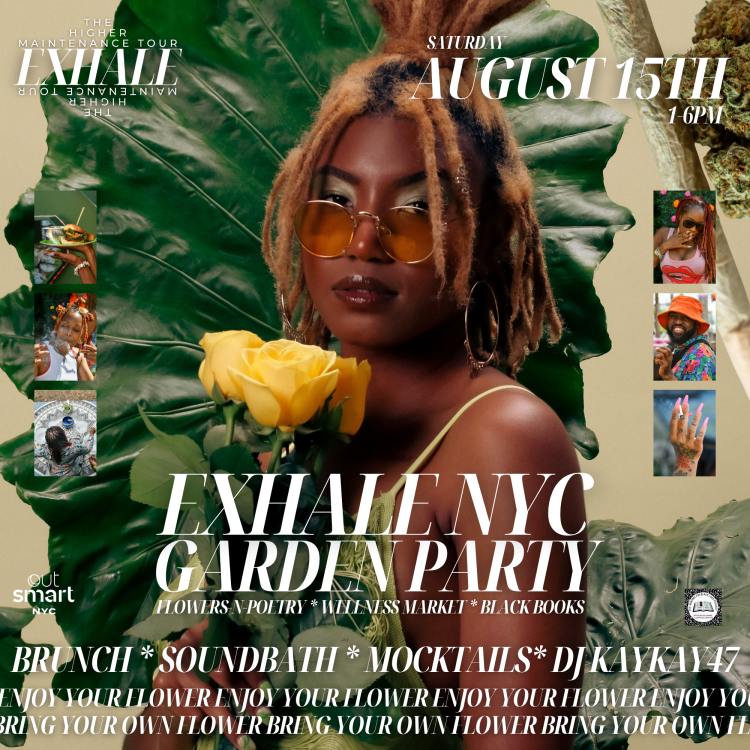
Hosted at Padre Plaza Community Garden, EXHALE NYC is a celebration of cannabis empowerment that centers Black, Brown, Latinx, and Indigenous communities. Immersed in the award winning garden, guests will enjoy a day of poetry, sound baths, infused brunch, live DJs, and intentional community gathering in a private, pro-flower safe space.
Wellness activations—such as community healing events, mindfulness workshops, movement classes, herbal education, storytelling circles, and culturally rooted health experiences—can play an important role in Black and Latinx communities because they create accessible spaces for healing while reconnecting people to cultural traditions that have often been marginalized or erased.
One important aspect of this discussion is recognizing that many practices now marketed as premium wellness experiences have deep roots in Indigenous, African, and other non-European cultures.
Wellness is often talked about as something deeply personal: taking care of your body, protecting your peace, eating well, moving more, or making time to rest. But in many Black and Latinx communities, wellness has always been bigger than the individual.
It can look like gathering with family, sharing food, dancing, spending time outdoors, learning from elders, praying, making music, tending a garden, or simply having a space where people feel seen and supported.
That’s part of what makes community wellness activations so meaningful. They can create opportunities to connect health and healing with culture, community, and lived experience.
Wellness Can Help Close Gaps in Access
Black and Latinx communities continue to experience health disparities shaped by longstanding social, economic, and environmental inequities. Those challenges can affect everything from access to preventive care and mental health services to exposure to environmental stress and chronic illness.
Community-based wellness events can’t replace healthcare, but they can help fill some important gaps.
A wellness activation might give someone access to health education they haven’t encountered before, introduce them to local resources, or create a more comfortable environment for conversations about mental health. Just as importantly, these spaces can build trust.
When wellness programming feels culturally relevant and is led by people who understand the community, it can feel less like a service being delivered to people and more like something being created with them.
Healing Has Always Been Community-Based
The idea that wellness has to happen alone is relatively new.
Across the African diaspora and throughout Latin America, many traditions have approached health and healing collectively. Families, elders, spiritual leaders, neighbors, artists, and community members have all played a role.
Music and dance can bring people together. Food can carry cultural memory. Nature can provide space for reflection. Storytelling can pass knowledge from one generation to the next. Ceremony and spirituality can create a sense of connection and meaning.
Modern wellness activations can build on that history by creating spaces where people can experience wellness together.
Instead of asking, “What do I need to do to take better care of myself?” the conversation becomes, “What do we need to feel healthier, more connected, and more supported?”
Culture Is Part of Wellness
There is also something powerful about seeing your culture reflected in a wellness space.
For Black and Latinx participants, cultural representation can make an experience feel more familiar, relevant, and affirming. It can also create opportunities for younger generations to learn from traditions and knowledge that may not always be represented in mainstream wellness spaces.
That might mean incorporating Afro-diasporic movement and dance, exploring traditional foods and herbal knowledge, creating space for storytelling, or bringing generations together for conversations about rest, resilience, and healing.
The goal isn’t to romanticize the past or suggest that traditional practices should replace modern medicine. It’s about recognizing that cultural identity, community, and history can all be part of how people understand and experience wellness.
When Culture Becomes a Wellness Trend
There is another side of the wellness conversation that deserves attention: the commercialization of cultural practices.
Many practices that are now common in mainstream wellness have roots in Indigenous, African, Asian, Caribbean, and Latin American communities. Over time, some of these traditions have been separated from their cultural or spiritual context and repackaged for a modern consumer audience.
Herbal medicine, plant-based healing, meditation, yoga, breathwork, sweat bathing, sound practices, and traditional foods are just a few examples of wellness areas with deep cultural histories.
Cultural exchange itself isn’t necessarily a bad thing. Sharing knowledge can create connection and understanding. The problem comes when practices are taken out of context, stripped of their history, or turned into products and experiences without acknowledging or benefiting the communities that preserved them.
In some cases, traditions that were once dismissed, restricted, or stigmatized when practiced by marginalized communities later became profitable after being adopted by mainstream wellness industries.
From Cultural Tradition to Luxury Commodity
There can be a familiar pattern.
A practice is developed and maintained within a community. That community may face discrimination or pressure to abandon the tradition. Years later, the same practice is rediscovered by the mainstream wellness industry, given new language, and packaged as a premium experience.
Traditional herbal knowledge can become an expensive botanical product. Foods with deep cultural histories can suddenly be marketed as “superfoods.” Spiritual or ceremonial practices can be adapted into retreats. Community healing circles can become corporate leadership experiences.
The practice may look similar on the surface, but something important can change along the way: who gets recognized as the expert, who gets paid, and whose history is being told.
That’s why acknowledgment matters.
What Does Cultural Respect Look Like?
Respect starts with giving credit.
It means acknowledging the communities and cultures behind wellness traditions rather than presenting them as newly discovered trends. It means creating opportunities for practitioners from those communities to lead, teach, and benefit economically from their own knowledge.
It also means knowing when a practice is sacred or ceremonial and shouldn’t simply be repackaged for commercial use.
And perhaps most importantly, it means thinking about accessibility. If a tradition has historically been part of community life, wellness shouldn’t have to become a luxury product before people are allowed to experience it.
Sharing across cultures can be meaningful when it is done with context, respect, and reciprocity.
Reimagining Wellness Through Community
Culturally rooted wellness activations offer an opportunity to take that approach one step further.
Imagine a wellness event that brings together movement, music, food, storytelling, health education, and community connection. Imagine a garden where people can learn about traditional plants and foodways. A gathering where elders share stories with younger generations. A dance class that celebrates Afro-diasporic movement. A conversation about rest and resilience that acknowledges the cultural pressures many people carry.
These experiences remind us that wellness doesn’t have to look like a luxury spa, an expensive retreat, or a perfectly curated self-care routine.
It can look like community.
It can look like movement and music. It can look like cooking together, sharing stories, creating art, spending time outside, or simply making room for people to breathe and reconnect.
When wellness activations center both evidence-based health information and culturally rooted knowledge, they can become more than events. They can become spaces for connection, education, affirmation, and belonging.
For Black and Latinx communities especially, that can mean creating wellness experiences that don’t ask people to leave their culture at the door.
Instead, they invite culture to be part of the healing.
About EXHALE NYC
EXHALE NYC is New York City’s radically influential cannabis wellness experience, centering Black, Brown, Latinx, and Indigenous communities through intentional gathering, education, culture, and celebration.



One thought on “Why Wellness Activations Matter in Black and Latinx Communities.”